I decided to work with my AP French art project. My students are in grades 10-12 and are able to do quite a bit of self-directing. Projects like these enable me to provide students with choice and to help them build critical planning and project-execution skills. For this project, students are working in French to analyze a French artist, make artwork inspired by that artist, and present and defend their choices and work.
Project objectives:
- Vocabulary acquisition: Because this course is an AP course, it is important that students develop an understanding and vocabulary for the six themes of the French exam. One of these themes is “Beauty and Aesthetics.” Thus, an objective is for students to learn how to talk about and analyze art in French. In other words, I will be looking to see if students learn the lexicon related to art and the analysis of art. Can they use the proper and specific technical vocabulary?
- Justification and analytical skills: I would like for students to work on their written and spoken French skills, particularly when it comes to forming and justifying an argument. My objective in this regard is that students are able to summarize and put forth a written analysis in French. Then, they will work on explaining and justifying their choices to the audience that will watch their presentations.
- Curiosity and knowledge: As this course is all about both the French language and the Francophone world, the objectives must move beyond French language skills. My final objective is for students to gain an in-depth understanding of a Francophone artist and this person’s influence on the world. Then, it is my hope that students will get to be creative and explore this art through their own creative production.
Project description: After having studied art on a general level in class, students will pick one type of art to dive into. They will research and write an analysis of a Francophone artist (detailing biography and characteristics of the artist’s work). They will then create art inspired by the artist they studied, justifying their choices in a written paragraph. Finally, they will share their work with a visual and oral presentation open to the entire school. Students and teachers from the school will attend this presentation and ask questions in English and French.
The options are the following artistic tracks:
- Poetry: studying a poet and writing a poem
- Music: studying a musician and writing a song
- Painting: studying a painter and making a painting OR curating an exhibit
- Film: studying a filmmaker and making a short film
There are three pieces that the student produce during this project:
- 1.5-2 page written analysis of their artist
- Creative work inspired by their artist and a paragraph justifying their choices
- A presentation with visual and oral aspects
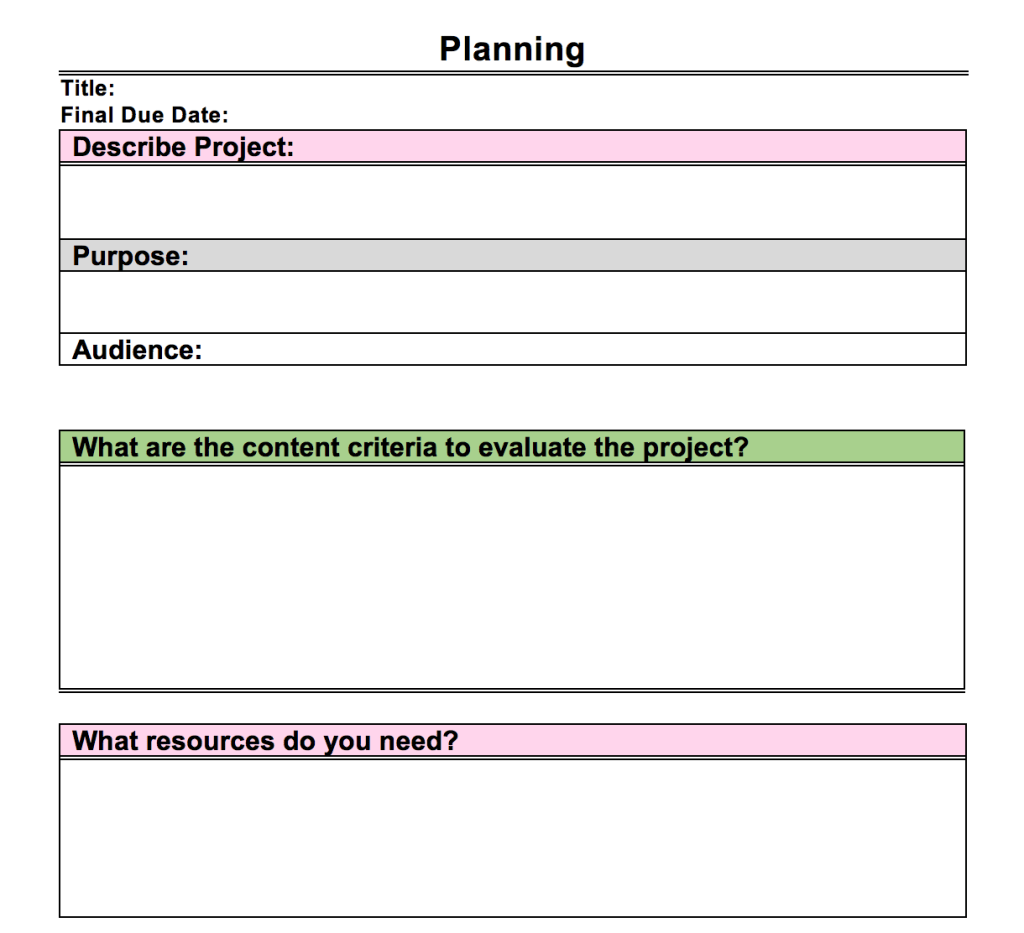
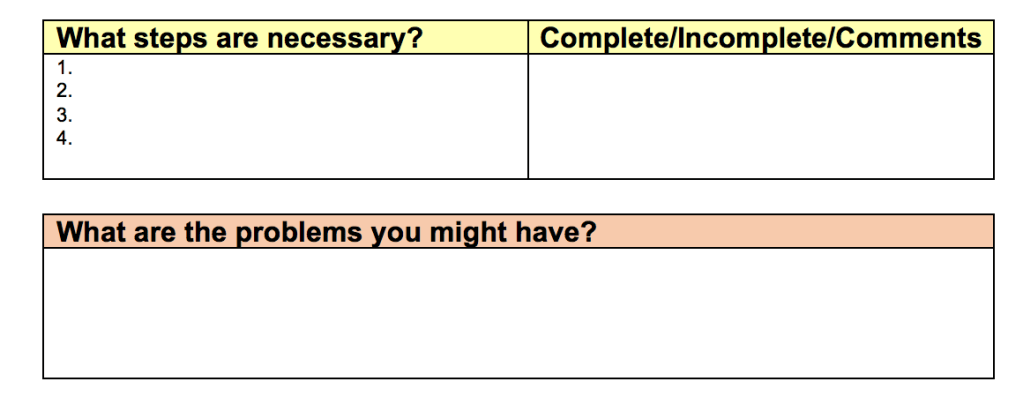
Students direct their own project during class. We spend a lot of time working on creating class-wide research questions and criteria for decision making. Then, we create a planning packet that asks students to think about what materials they will need and what the deadlines mean for their process. Here are some examples from that packet:
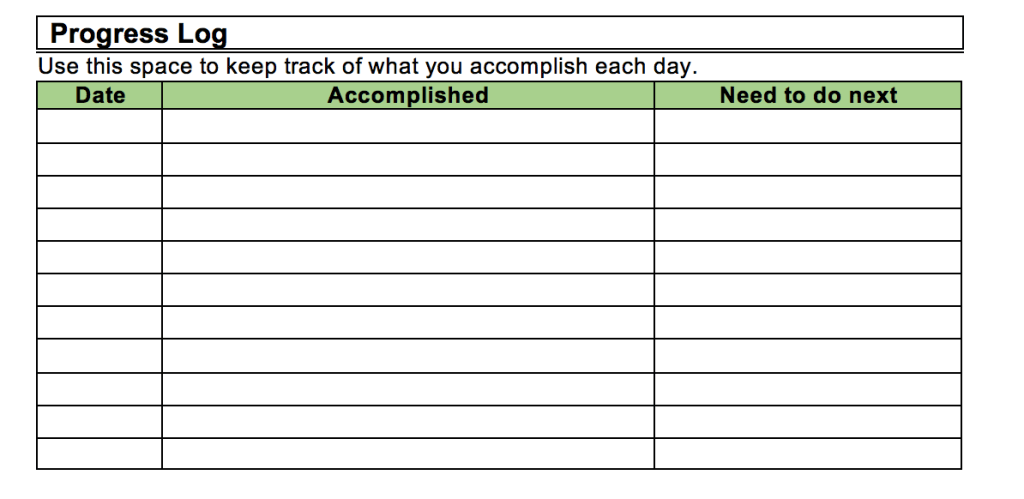
In order to have students push their project forward, I create this activity log. They set a daily goal for themselves and then report back on whether or not they have accomplished this goal. We talk about what it means to set good goals (using the SMART acronym– Specific, Measurable, Achievable, Realistic, and Timely). In this way, I can monitor student progress.
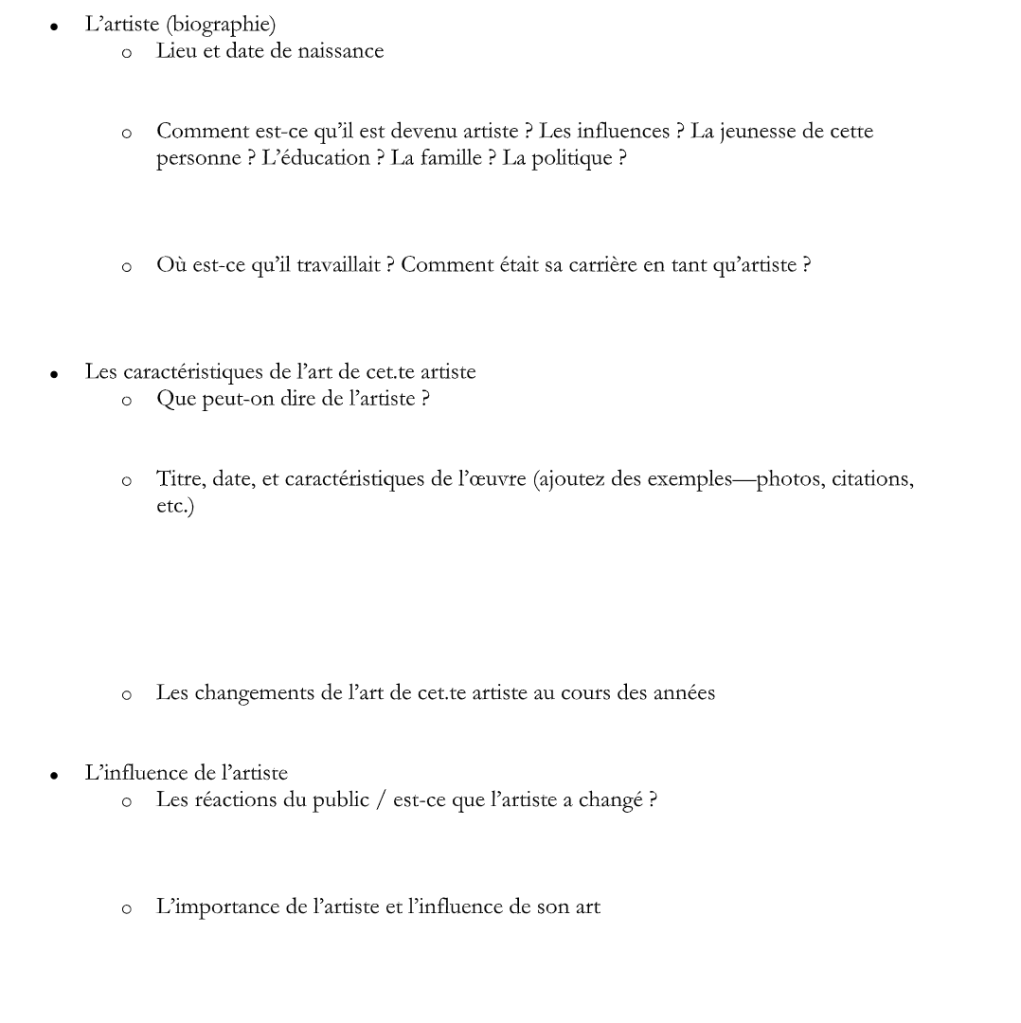
Figuring out how to go about such a big project can be daunting. I create a lot of resources and place them on our Google Classroom so that students can use templates for research.
In addition, students have certain dates where they have to hand in rough drafts (not graded) for feedback. We set these dates together as a class, after having discussed the final presentation date. In this way, the deadlines feel more democratic and students understand and accept the pacing of the project. Also, this is how I assess learning and progress throughout the project. Each of these pieces help me see how students are doing (in addition to the one-on-one conferencing I do with them during class). For my current class, this is the pacing we agreed on:
- Hand in the rough draft of the artistic analysis — receive feedback and revise (January 14)
- Hand in the final draft of the artistic analysis (January 16)
- Hand in the rough draft of the creative production — receive feedback and revise (January 21)
- Hand in the final draft of the creative production (January 23)
- Practice the visual and oral presentation — receive feedback and revise (January 26)
- Perform the final visual and oral presentation. (January 28)
What does the feedback that I give look like during the rough draft stages? I provide clear written suggestions on trends in grammar mistakes and areas for strengthening content. Then, I meet with students one-on-one to discuss their ideas and how they can push their work further. We set a game plan together so that they have to tell me what 2-3 concrete steps they will take for revisions.
The feedback that I give during the final draft stages is based on a single-point rubric that students help me create. We work together to determine the criteria for evaluation. Students self-assess on a mastery spectrum scale. They have to justify the grade that they think they earned. Then, I fill out the single-point rubric to highlight areas of growth for each criteria and areas close to mastery.
Here are screenshots of the example of the rubric that students fill out for themselves:
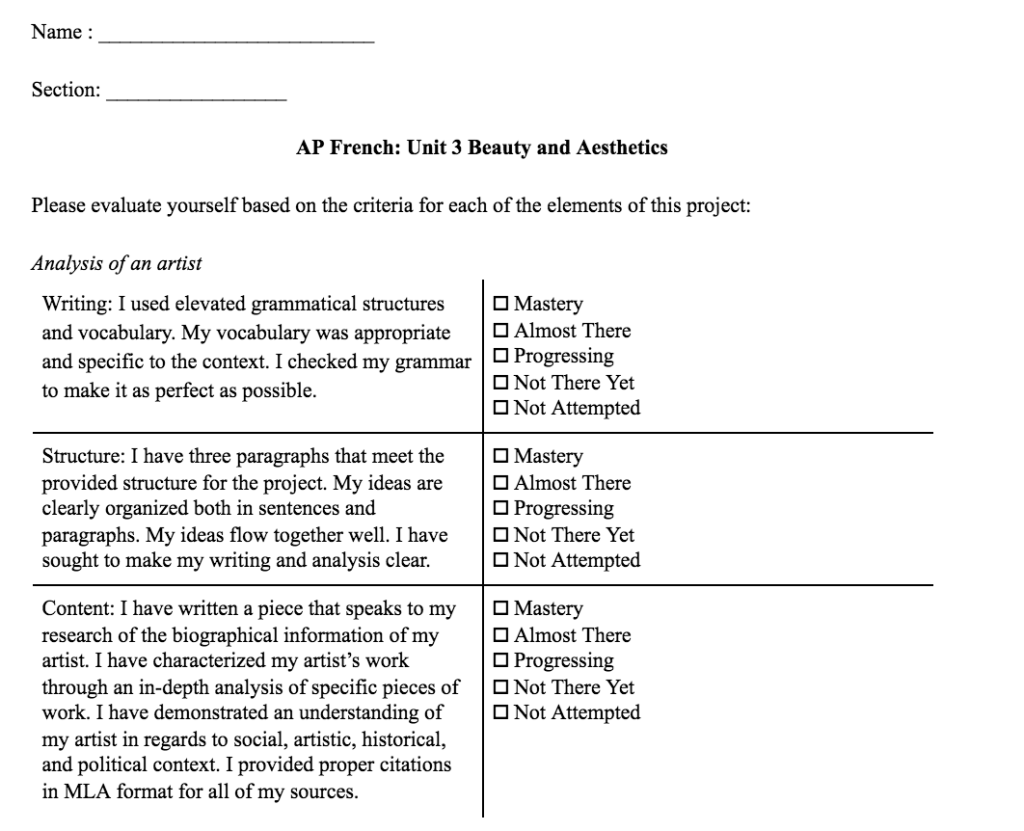
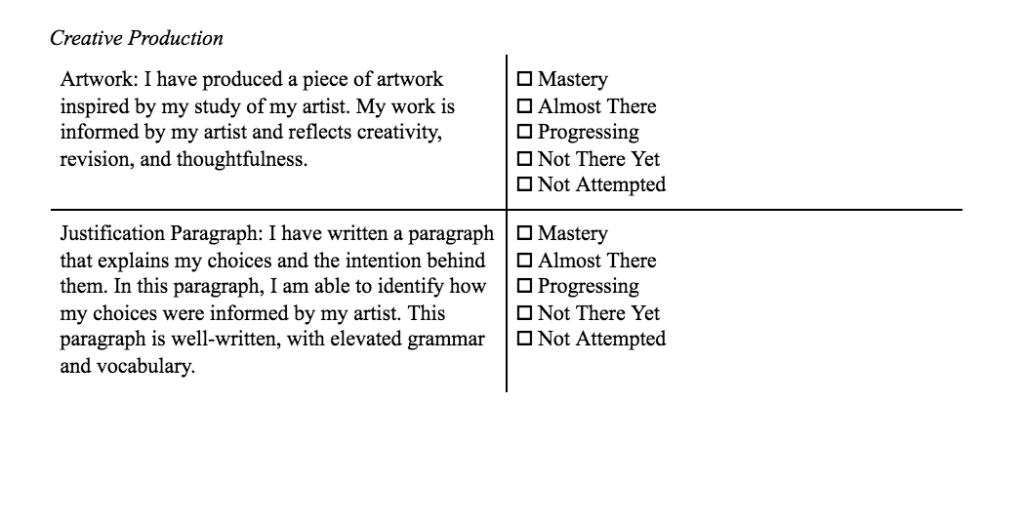
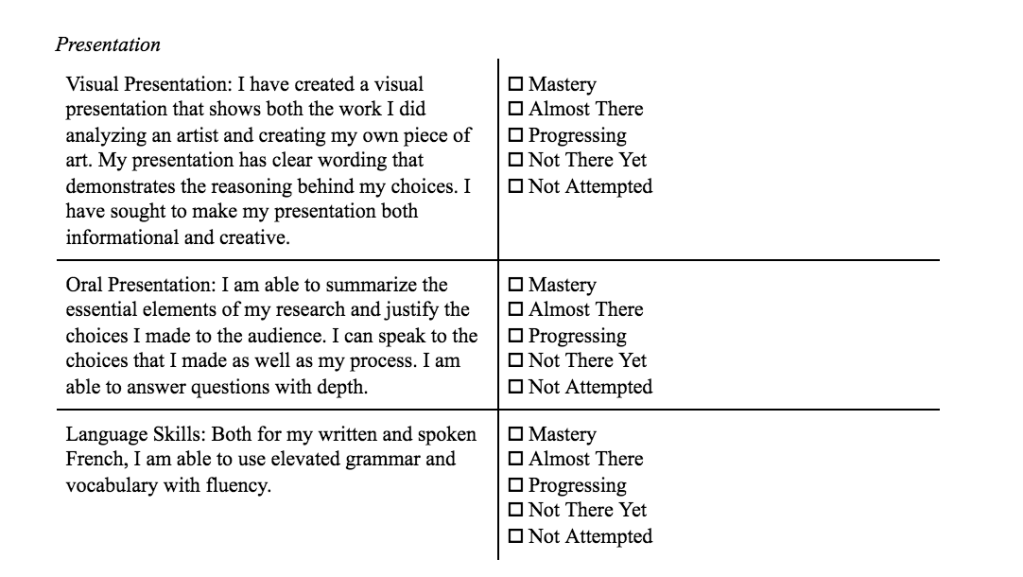
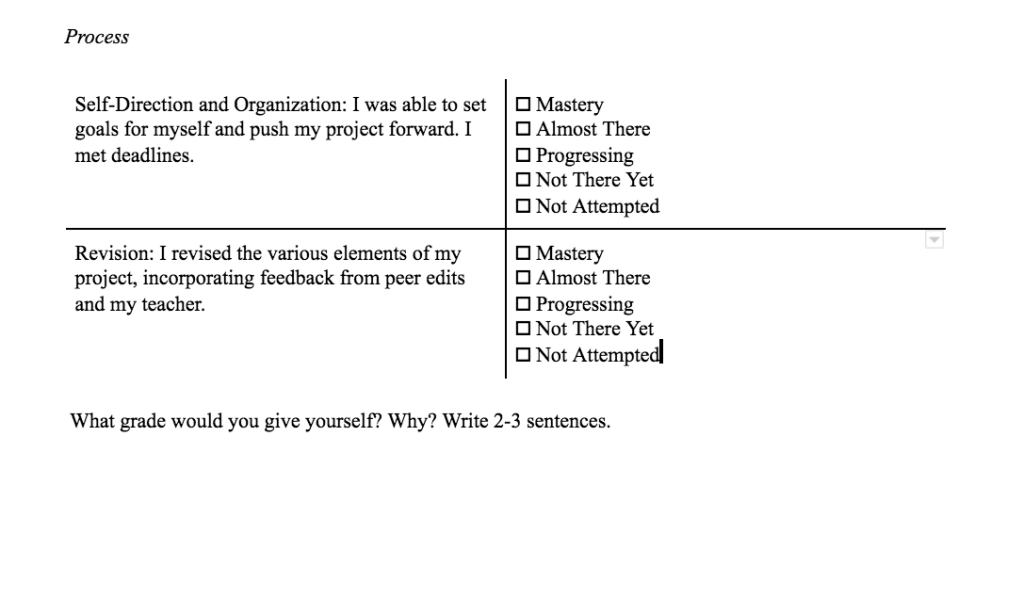
Here is a PDF download of the student rubric that allows for them to self-evaluate:
Here is the example of the single-point rubric that I fill out. The criteria are the same. Instead of checking boxes, I write areas for growth and areas of strength for each point.
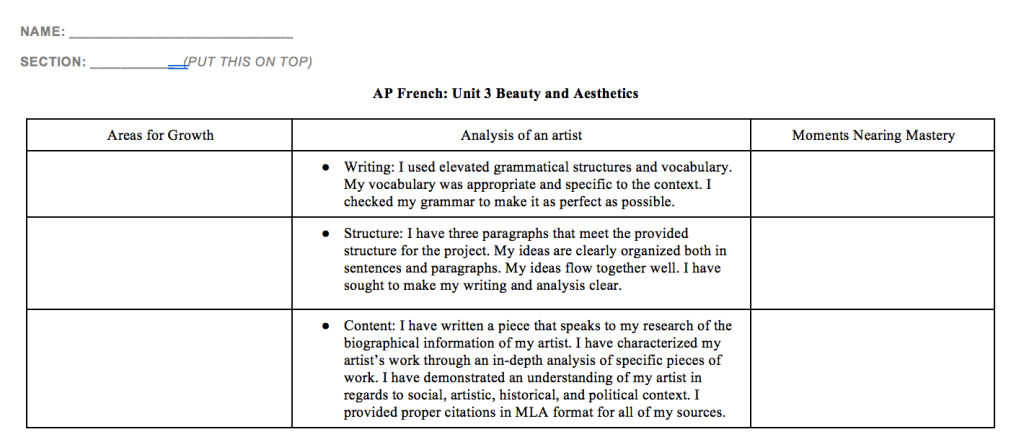
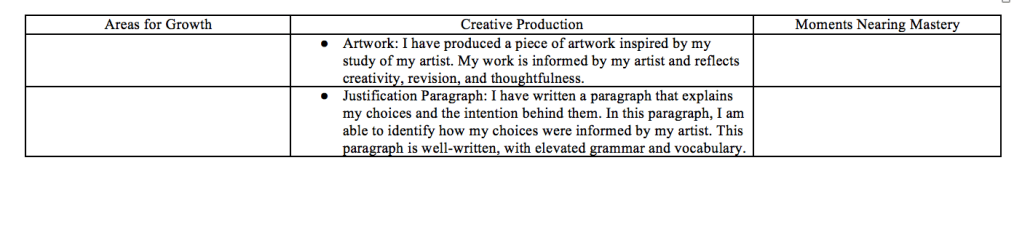
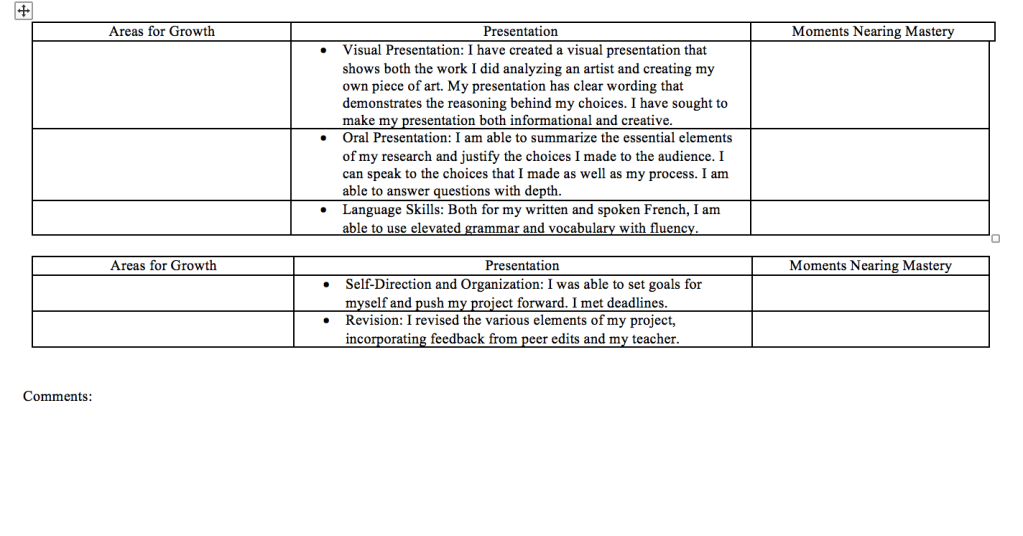
Here is a PDF download of the single-point rubric that I use to evaluate:

